Explore the Pollinator Corridor
Discover how roadsides, maps, native plants, and communities can work together to reconnect pollinator habitat across New England.
Meet the Pollinators
Pollinators support healthy ecosystems and food production, but the habitats they depend on are disappearing. Meet some of New England’s pollinators and discover what they need to survive.
More Than a Roadside
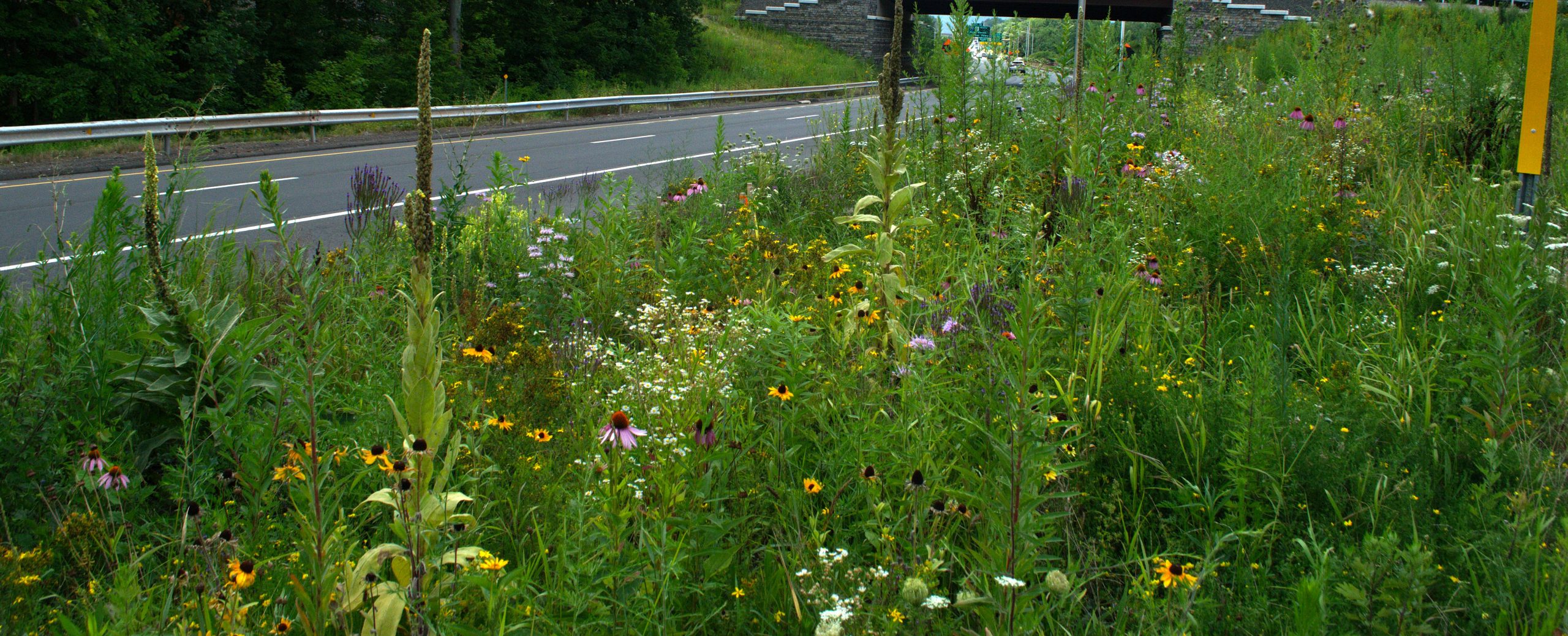
What if roadsides could do more than border our highways? With thoughtful management, these linear spaces can provide food, nesting habitat, and connections between fragmented habitats.
Connecting New England
Follow I-91 through Connecticut, Massachusetts, and Vermont and, see how existing habitat and new “stepping-stone” sites could form a connected pollinator corridor.
Mapping the Missing Links
Not everything that looks green provides the same habitat. Explore how GIS, land cover, habitat quality, and pollinator flight distances reveal where strong habitat exists—and where connections are missing.
Where Can We Make a Difference?
Some places offer greater opportunities than others. Explore the maps to see where roadsides, public lands, and protected spaces could help fill gaps in the corridor.
Find Your Place in the Corridor
A connected landscape is built one habitat at a time. See how your yard, school, park, or community space could become part of a larger network supporting pollinators across New England.
Explore the Interactive StoryMap →
DOT Manual - Effective Establishment of Native Grasses on Roadsides in New England ~ 80 MB
Roadside Revegetation: An Integrated Approach to Establishing Native Plants
This web site contains four integrated and interlinked modules dedicated to explaining the art and science of roadside
revegetation. Each module contains similar topics, but communicates them differently depending on informational
needs. You may begin with any module and continue through it step-by-step or you may use the in depth links to visit
related information in other modules to reinforce what you are learning.